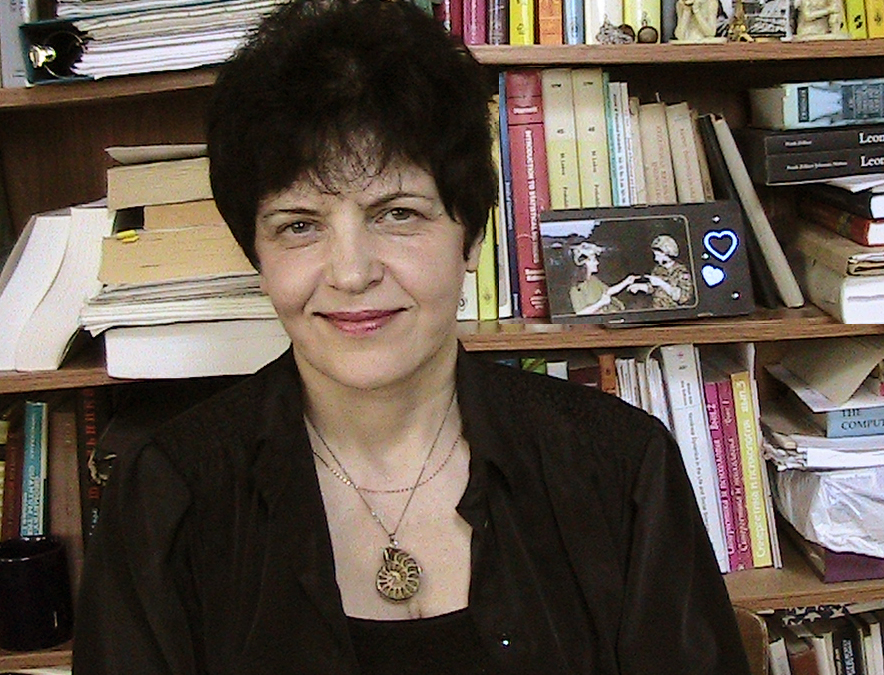
 IRINA NICOLAEVNA TROFIMOVA, Ph.D.,
 Registered Clinical Psychologist
|
Authorship
of the ideas and findings: in
differential psychology/taxonomies in clinical psychology/psychiatry |
For
the Structure of Temperament Questionnaire (STQ) click here
Occupational
(psychology)
1993-1995
- Ph.D., Laboratory of Differential Psychophysiology and Differential
Psychology, Institute of Psychology, Russian Academy of Science
1982-1988
- M.Sc., Department of Psychology, Lomonosov Moscow State University, Russia
Non-occupational:
1970-1977
- Music School N9, Novosibisrk, Russia
2005-2006
- Physics courses 2H04 and 4B03, McMaster University, Canada
1999-2000
- Physics courses 3M03 and 4M03, McMaster University, Canada
1994-1997
- Postdoctoral training in nonlinear dynamics, Keldysh Institute of Applied
Mathematics, Moscow, Russia
ACADEMIC
AND PROFESSIONAL EXPERIENCE:
Professional:
1997 -
present - Assistant Clinical Professor (Adjunct ); Senior Researcher, Laboratory
of Collective Intelligence, Department of Psychiatry and Behavioral
Neurosciences, McMaster University, ON, Canada
2004 -
present - Clinical Psychologist, Co-Director of Psychological
Services, Toronto, Hamilton & Niagara Falls region, Ontario
2007 -
present - Clinical Psychologist, Late Life Memory Clinic, Dunnville Hospital
(Haldimand-Norfolk area), ON
2017 -
Clinical Supervisor, Clinical & Counselling Psychology Program, Department
of Applied Psychology & Human Development, OISE, University of Toronto, ON.
2017 -
Clinical Psychologist, Unison Medical Clinic, Toronto, ON
2015 -
2017 - Clinical Psychologist, Mediwise Healthcare Clinic, Mississauga, ON
2008 -
2009 - Clinical Psychologist, Silver Counselling Psychology Center, Burlington,
ON
2007 - 2008 - Clinical Psychologist, Matrix
Rehabilitation Center, Burlington, ON
1999 -
2007 - Clinical Psychologist, Kaplan & Kaplan Psychologists, Hamilton, ON
1999 -
2000 - Part-time instructor, Brock University, the course
"Cognition". St. Catherines, ON
1999 -
2000 - Invited lecturer, Toronto Mamonides College, the course
"Educational Psychology", Toronto, ON
1995-1997:
Assistant
Professor, Moscow State Social University
Senior
Scientific Researcher, Keldysh Institute of Applied Mathematics, Moscow
Invited
Lecturer, Moscow State University, Department of Psychology
Part-time
Lecturer, Moscow Institute of Physics and Technologies
President,
Russian Synergetic Society (RSS).
1993-1995:
Faculty,
Moscow Technical University of Communications and Informatics
Faculty,
Sociological College, Moscow
Invited
Lecturer, International University of Social-Justice Relations, Moscow
1991-1992:
Senior Inspector, Russian Government, Department of The President's Assistant
on Youth Affairs.
1989-1991:
Junior
Scientific Researcher, Research Center of Institute on Youth, Moscow.
Invited
Lecturer, Institute of Youth, Moscow.
1988-1989:
Psychologist, Research Institute of Precision Measurement, Moscow.
AUTHORSHIP OF THE
IDEAS AND FINDINGS:
... in
differential psychology (psychology of individual differences in behaviour
and their classifications)
Idea 1. The structure
of adult temperament (biologically based individual differences) and therefore
classification of temperament traits can be presented in line with universal
architecture of mammal's behaviour, i.e. in line with stages and functional
aspects of actions' construction. She offers the "Functional Ensemble
of Temperament (FET)" model consisting of 12
components, which reflect the regulation
of behaviour in four universal aspects: 3 dynamical
aspects (energetic, integration-related and
orientation-related), probabilistic (known/east task vs. uncertain/complex),
activity-specific (physical vs. verbal-social vs. mental) and emotional amplifier
of dynamical aspects. Her model is a derivative of
Luria's neuropsychological model of behavioural regulation and Rusalov's STQ
model.
The FET model was
implemented in the Compact Structure of
Temperament Questionnaire (STQ-77, see free forms for testing here)
|
Situation of: emergency
complexity |
|
Dynamical
aspects of an action with a function to... --- to
orient/select --- to
initiate/mobilize -- to sustain an action |
|||
|
|
Sensitivity
to reinforces: |
Endurance |
|||
|
low --► |
higher --► |
Probabilistic (Mental) tuning |
Sensitivity to
Probabilities |
Plasticity |
Intellectual Endurance |
|
|
lower --► |
Social-verbal |
Empathy sensitivity to
others |
Social Tempo |
Social Endurance |
|
|
Physical-motor Deterministic |
Sensitivity to
(seek for) sensations |
Physical Tempo |
Physical
Endurance |
|
|
high --► |
high --► |
Emotional amplifier |
Neuroticism sensitivity to
novelty |
Impulsivity |
Satisfaction projection of
success |
References:
Rusalov,
V.M. & Trofimova, I.N. (2007) The Structure of temperament and
its measurement. PSP: Psychological Services Press, Toronto.
Trofimova, I. (2009) Exploration of the benefits of an
activity-specific test of temperament. Psychological Reports, 105, 643-658. See
PDF
Trofimova,
I. (2010) Questioning the "general arousal" models. Open
Behavioral Science and Psychology, 4, 1-8.
DOI: 10.2174/1874230001004010001 http://bentham-open.com/contents/pdf/TOBSJ/TOBSJ-4-1.pdf
Trofimova, I. (2010). An investigation into
differences between the structure of temperament and the structure of
personality. American Journal of Psychology. 123, 4, 467-480.
DOI: 10.5406/amerjpsyc.123.4.0467 PDF
Trofimova, I. & Sulis W. (2010). An investigation
of temperament in adults with comorbid depression and anxiety. Advances in
Bioscience and Biotechnology, 1, 3, 190-199. DOI:
10.4236/abb.2010.13027. See PDF
Trofimova,
I. & Sulis W. (2011). Is temperament activity-specific? Validation of the
Structure of Temperament Questionnaire - Compact (STQ-77). International
Journal of Psychology and Psychological Therapy, 11(3), 389-400. PDF
Rusalov,
V.M., Trofimova, I.N. (2011). Representation of psychological types in various
models of temperament (О
представленности
типов психической
деятельности
в различных
моделях темперамента).
Psychological Journal, 32, 3, 74-84. PDF
Trofimova,
I. (2016) The interlocking between functional
aspects of activities and a neurochemical model of adult temperament. In:
Arnold, M. C (Ed.) Temperaments: Individual Differences, Social and
Environmental Influences and Impact on Quality of Life. Nova Science
Publishers, Inc., NY. pp.77-147
Trofimova,
I. & Christiansen, J. (2016) Coupling of temperament traits with mental
illness in four age groups. Psychological Reports, 118, 2. DOI
10.1177/0033294116639430. PDF
Trofimova,
I. & Robbins, T.W. (2016) Temperament and arousal systems: a new synthesis
of differential psychology and functional neurochemistry. Neuroscience and Biobehavioral
Reviews, 64, 382-402. DOI: 10.1016/j.neubiorev.2016.03.008. PDF
Trofimova,
I. & Sulis W. (2016a). Benefits of distinguishing between physical and social-verbal
aspects of behaviour: an example of generalized anxiety. Frontiers in
Psychology, 7:338. doi: 10.3389/fpsyg.2016.00338 PDF
Trofimova,
I. & Sulis, W. (2016b). A study of the coupling of FET temperament traits
with Major Depression. Frontiers in Psychology, 7: 1848. doi:
10.3389/fpsyg.2016.01848. PDF
Trofimova,
I. & Sulis W. (2018). There is more to mental illness than just negative
affect: comprehensive temperament profiles in depression and anxiety. BMC
Psychiatry, 18: 125. https://doi.org/10.1186/s12888-018-1695-x
Trofimova, I. (2018). Functionality vs dimensionality in psychological taxonomies, and a puzzle of emotional valence. Philosophical Transactions of the Royal Society, series Biology, 373 (1744). doi: 10.1098/rstb.2017.0167.
Trofimova, I. (2019).
An overlap between mental abilities and temperament traits. In: McFarland, D.
(Ed.) General and specific
mental abilities. Cambridge, UK: Cambridge Scholars Publishing.
p.176-225.
Trofimova, I. (2021). Contingent tunes of neurochemical ensembles in the norm and pathology: can we see the patterns? Neuropsychobiology, 80(2), 101-133, doi: 10.1159/000513688.
Kanen, J. W., Robbins, T.W. & Trofimova, I.N. (2021). Harnessing Temperament to Elucidate the Complexities of Serotonin Function. PsyArXiv. July 18. doi:10.31234/osf.io/gvmuy.
Trofimova, I. (2021). Functional constructivism approach to multilevel nature of biobehavioural diversity. Frontiers in Psychiatry. 12:641286, doi: 10.3389/fpsyt.2021.641286
Trofimova, I. & Gaykalova, A. (2021). Emotionality vs. other biobehavioural traits: a look at neurochemical biomarkers for their differentiation. Frontiers in Psychology, 12: 781631 doi: 10.3389/fpsyg.2021.781631.
Trofimova I. (2022). Transient nature of stable behavioural patterns, and how we can respect it. Current Opinions in Behavioural Sciences, 44. doi: 10.1016/j.cobeha.2022.101109.
Kanen, J., Robbins, T.W., Trofimova I. (2022) Harnessing temperament to elucidate the complexities of serotonin function. Current Opinions in Behavioural Sciences, 45. doi: 10.1016/j.cobeha.2022.101108.
Idea 2. Based on the
experimental results, Irina suggested that there might be a "middle age - middle sex" phenomenon: sex
differences in verbal tempo and physical endurance are more pronounced during
youth, fading at the end of the young adulthood. We
argued that sex differences in these two
types of abilities might be "a matter of age", and should not be attributed to gender in general.
References:
Trofimova, I. (2013) A study of the dynamics of
sex differences in adulthood. International Journal of Psychology, 48
(6), 1230-1236. DOI: 10.1080/00207594.2012.756981 See PDF
Idea 3. Many models of the
structure of personality (such as Big Five, Big Six, Big Seven, etc) were
derived on the basis of verbal descriptors of people's behaviour (lexical
approach). Irina suggests that this approach is relevant to study an impact of peer
perception on language but not the structure of core individual differences.
Language possesses a strong sociability bias, reflective of its role in
socialization, and thus has more descriptors related to affiliation and
sociability than other descriptors of individual differences. Since factor
analysis depends on inter-correlations between items in the lists, this bias
will create a big factor of Extraversion in any language. Moreover, there is a
strong negativity bias of emotionality and as, a consequence, there are more
words related to negative than to positive emotions. As the result, the largest factors in lexical approach models
(Extraversion and Neuroticism) as artefacts of the sociability bias of language
and the negativity bias of emotionality, and cannot be used as taxonomy structure
of consistent individual differences in behaviour.
References:
Trofimova,
I. (2010) Questioning the "general arousal" models. Open
Behavioral Science and Psychology, 4, 1-8.
DOI: 10.2174/1874230001004010001 http://bentham-open.com/contents/pdf/TOBSJ/TOBSJ-4-1.pdf
Trofimova,
I. (2014) Observer bias: how temperament matters in semantic perception of
lexical material. PLOS ONE, 9(1): e85677. doi:10.1371/journal.pone.0085677, http://journals.plos.org/plosone/article?id=10.1371/journal.pone.0085677
Trofimova,
I. (2016) The interlocking between functional aspects
of activities and a neurochemical model of adult temperament. In: Arnold, M. C
(Ed.) Temperaments: Individual Differences, Social and Environmental
Influences and Impact on Quality of Life. Nova Science Publishers, Inc.,
NY, pp. 77-147
Trofimova,
I., Robbins, T., Sulis, W., Uher, J. (2018) Taxonomies of
psychological individual differences: biological perspectives on millennia-long
challenges. Philosophical Transactions of the Royal Society, Biology.
doi: 10.1098/rstb.2017.0152
Uher, J., Trofimova, I., Sulis, W., Netter, P.,
Pessoa, L., Posner, M., Rothbart, M., Rusalov, V., Petersen, I., Schmidt, L.
Diversity in action: Exchange of perspectives and reflections on taxonomies of
individual differences. Philosophical Transactions of the Royal Society,
Biology. 373 (1744) doi: 10.1098/rstb.2017.0172
Trofimova, I. & Araki, M. (2022). Psychometrics vs neurochemistry: A controversy around mobility-like scales of temperament. Personality and Individual Differences, 187, 111446. https://doi.org/10.1016/j.paid.2021.111446.
Trofimova I.N., Bajaj S., Bashkatov S.A., Blair J., Brandt A, Chan R.C.K., Clemens B, Corr P. J., Cyniak-Cieciura M., Demidova L., Filippi C. A., Garipova M., Habel U., Haines N., Heym N., Hunter K., Jones N.A., Kanen J., Kirenskaya A., Kumari V., Lenzoni S., Lui S.S.Y., Mathur A., McNaughton N., Mize K.D., Mueller E. Netter P., Paul K., Plieger T., Premkumar P., Raine A., Reuter M., Robbins T.W., Samylkin, D, Storozheva Z., Sulis W.H., Sumich A., Tkachenko A.A., Valadez E., Wacker J., Wagels L., Wang L., Zawadzki B., Pickering A. (2022) What's next for the neurobiology of temperament, personality and psychopathology? Current Opinions in Behavioural Sciences, 45. 10.1016/j.cobeha.2022.101143.
... in neuroscience
of individual differences in behaviour:
Idea 4. There
is no one-to-one correspondence between a single neurochemical system and a
feature of behavioural regulation. Neurotransmitter
, hormonal and opioid systems regulating temperament traits work in overlapping
teams and have functional specializations reflecting the functional aspects of
construction of behaviour. These systems are strongly interdependent, contingent on
each other's state and have feedback relationships. For this reason our neurochemical model of temperament is called Functional Ensemble
of Temperament (FET). Temperament traits are
presented as behavioural dispositions emerging from relationships between
specific neurotransmitters in a following way:
|
Functional
aspects: |
Behavior. orientation to.. (NE+...) |
Integration
aspects (DA+...) |
Energetic
aspects (5-HT,
ACh +...) |
|
Probabilistic/
> analytic aspects |
to learning probabilities, PRO NE+ACh+Glu, DA |
Plasticity, PL DA+ACh, 5-HT, GABA |
Intellectual Endurance, ERI ACh+NE, 5-HT |
|
Social-verbal |
to others: Empathy, EMP NE+OXY, VSP |
Social Tempo, TMS DA+ Estr |
Social Endurance, ERS 5-HT+Estr, H |
|
Physical-motor (>deterministic) |
to sensations, SS Teststrn, Adr, Cort(-), NE |
Motor Tempo, TMM DA+GABA, A, NP |
Motor Endurance ERM, 5-HT+ORE, H, NP |
|
Emotional
amplifiers |
Neuroticism, NEU KOR, cytokins, biota →NE-HPA |
Impulsivity, IMP DOR→DA, MOR |
Satisfaction, SLF MOR, biota→5-HT, DA |
References:
Trofimova,
I. (2016) The interlocking between functional
aspects of activities and a neurochemical model of adult temperament. In:
Arnold, M. C (Ed.) Temperaments: Individual Differences, Social and
Environmental Influences and Impact on Quality of Life. Nova Science
Publishers, Inc., NY pp. 77-147
Trofimova,
I. & Robbins, T.W. (2016) Temperament and arousal systems: a new
synthesis of differential psychology and functional neurochemistry.
Neuroscience and Biobehavioral Reviews, 64, 382-402. DOI:
10.1016/j.neubiorev.2016.03.008. PDF
Trofimova, I. (2018) Functionality vs dimensionality in psychological taxonomies, and a puzzle of emotional valence. Philosophical Transactions of the Royal Society, Biology, 373, 1744, doi: 10.1098/rstb.2017.0167.
Trofimova,
I. (2019). An overlap between mental abilities and temperament traits. In:
McFarland, D. (Ed.) General and specific mental abilities. Cambridge,
UK: Cambridge Scholars Publishing. pp. 176-225.
Trofimova, I. (2021). Contingent tunes of neurochemical ensembles in the norm and pathology: can we see the patterns? Neuropsychobiology, 80(2), 101-133, doi: 10.1159/000513688.
Kanen, J. W., Robbins, T.W. & Trofimova, I.N. (2021). Harnessing Temperament to Elucidate the Complexities of Serotonin Function. PsyArXiv. July 18. doi:10.31234/osf.io/gvmuy.
Trofimova, I. (2021). Functional constructivism approach to multilevel nature of biobehavioural diversity. Frontiers in Psychiatry. 12:641286, doi: 10.3389/fpsyt.2021.641286
Trofimova, I. & Gaykalova, A. (2021). Emotionality vs. other biobehavioural traits: a look at neurochemical biomarkers for their differentiation. Frontiers in Psychology, 12: 781631 doi: 10.3389/fpsyg.2021.781631.
Trofimova I. (2022). Transient nature of stable behavioural patterns, and how we can respect it. Current Opinions in Behavioural Sciences, 44. doi: 10.1016/j.cobeha.2022.101109.
Kanen, J., Robbins, T.W., Trofimova I. (2022) Harnessing temperament to elucidate the complexities of serotonin function. Current Opinions in Behavioural Sciences, 45. doi: 10.1016/j.cobeha.2022.101108.
... in
cognitive psychology (psychosemantics)
Idea 5. Irina was one of the
pioneers of the theory of embodiment in cognition. Starting from her PhD study
in 1993-1994 and continuing throughout two decades after that she demonstrated
cognition depends on the state of the body. In psychosemantics, she showed that attribution of meaning to events and objects
partially depends on the state of individual's body, and capacities to handle
these events ("projection through capacities"). Her
studies showed that sex and temperament (biologically based traits) have
specific influence on human semantic perception.
References:
Trofimova, I.N. (1995) Interconnection between temperament characteristics and parameters of semantic spaces of humans. Ph.D. thesis, Institute of Psychology, Russian Academy of Sciences, Moscow, Russia.
Trofimova I.N. (1997) Interconnection between characteristics of temperament and peculiarities of cognitive activity of human // Voprosi psychologii, N 1, 74-82.
Trofimova, I. (1999) Investigation of how people of
different age, sex and temperament estimate the world. Psychological Reports,
85/2, 533-552. doi: 10.2466/pr0.1999.85.2.533. See PDF.
Trofimova,
I. (2014) Observer bias: how temperament matters in semantic perception of
lexical material. PLOS ONE, 9(1): e85677. doi:10.1371/journal.pone.0085677, http://journals.plos.org/plosone/article?id=10.1371/journal.pone.0085677
Idea 6. Irina's experimental
studies in psychosemantics showed that men have a
tendency to favour mechanical and sensational concepts more than women, and
women favour more fluid and routine concepts than men. She offered
an evolutionary explanation to this tendency. She found that males prefer
structure-oriented and mechanical concepts whereas females favoured concepts
related to development and living systems processes. Irina argued that the language of math
and physics, invented originally by men, has a mechanical engineering bias and
therefore is not very suitable for life and social sciences.
References:
Trofimova,
I. (2011) Who is in charge of Science: men view "Time" as more fixed,
"Reality" as less real, and "Order" as less ordered. Cognitive
Systems Research, 15-16, 50-56.Doi:10.1016/j.cogsys.2011.07.001. See PDF
Trofimova, I. (2011) Are men evolutionarily wired to love the "Easy" buttons? Nature Precedings: January 19, 2011 https://www.nature.com/articles/npre.2011.5562.1; doi:10.1038/npre.2011.5562.1
Trofimova, I. (2012) Understanding misunderstanding: a
study of sex differences in meaning attribution. Psychological Research.
DOI: 10.1007/s00426-012-0462-8. See PDF
Idea 7. In conducting experimental studies in psychosemantics, Irina used a derivative of Osgood's Semantic Differential, adopted into her original experimental design called the Projective Semantics method.
References:
Trofimova I.N. (1997) Interconnection between characteristics of temperament and peculiarities of cognitive activity of human // Voprosi psychologii, N 1, 74-82.
Trofimova, I. (1999) Investigation of how people of
different age, sex and temperament estimate the world. Psychological Reports,
85/2, 533-552. doi: 10.2466/pr0.1999.85.2.533. See PDF.
Trofimova, I. (2014) Observer bias: how temperament matters in semantic perception of lexical material. PLOS ONE, 9(1): e85677. doi:10.1371/journal.pone.0085677,
Trofimova, I. (2011) Who is in charge of Science: men view "Time" as more fixed, "Reality" as less real, and "Order" as less ordered. Cognitive Systems Research, 15-16, 50-56.Doi:10.1016/j.cogsys.2011.07.001. See PDF
Trofimova, I. (2012) Understanding misunderstanding: a
study of sex differences in meaning attribution. Psychological Research.
DOI: 10.1007/s00426-012-0462-8. See PDF
... in clinical
psychology/psychiatry
Idea 8. The FET model can work as a
common framework for two types classification: 1) biologically-based individual
differences in healthy individuals (temperament) and 2) their extreme deviations,
known as psychiatric disorders. We suggest to call the approaches unifying
these two types of taxonomies as bio-behavioral
(psychological and psychiatric) taxonomies. Application of the FET
framework showed that symptoms of all known 20
main psychiatric diagnoses could be presented in a compact 12-components form
related to functional aspects of behaviour. Such presentation can
potentially fit into one page, instead of a variety of empirically-derived
descriptors presently existing in the DSM and ICD classifications of mental
disorders (not shown here).
Idea 9. Our clinical studies
showed that the FET could differentiate
between Major Depressive Disorder (MDD), Generalized Anxiety Disorder (GAD) and
Comorbid MDD-GAD much more efficiently than any other temperament or
personality framework applied to psych-psych taxonomies. For example, MDD differs from GAD by the compromised aspects of
physical capacities, and Comorbid condition affect "frontal cortical"
aspects of behavioural regulation (plasticity, ability to focus, probabilistic
(contextual) processing and impulsivity).
Idea 10. Our clinical studies
showed that depression and anxiety have a
significant impact on dynamical (speed of integration of an action) aspects of
activity (tempo, plasticity and impulse control), compromising the
integration of behaviour through an increase in rigidity and impulsivity.
References
to ideas 8-10:
Trofimova,
I. & Sulis W. (2010). An investigation of temperament in adults with
comorbid depression and anxiety.. Advances in Bioscience and Biotechnology,
1, 3, 190-199. DOI: 10.4236/abb.2010.13027 See PDF
Trofimova,
I. & Christiansen, J. (2016) Coupling of temperament traits with mental
illness in four age groups. Psychological Reports, 118, 2. DOI
10.1177/0033294116639430. PDF
Trofimova,
I. & Robbins, T.W. (2016) Temperament and arousal systems: a new
synthesis of differential psychology and functional neurochemistry.
Neuroscience and Biobehavioral Reviews, 64, 382-402. DOI:
10.1016/j.neubiorev.2016.03.008. PDF
Trofimova,
I. & Sulis W. (2016a). Benefits of distinguishing between physical and social-verbal
aspects of behaviour: an example of generalized anxiety. Frontiers in
Psychology, 7:338. doi: 10.3389/fpsyg.2016.00338 PDF
Trofimova,
I. & Sulis, W. (2016b). A study of the coupling of FET temperament traits
with Major Depression. Frontiers in Psychology, 7: 1848. doi:
10.3389/fpsyg.2016.01848. PDF
Trofimova, I. & Sulis W. (2018). There is more to mental illness than just negative affect: comprehensive temperament profiles in depression and anxiety. BMC Psychiatry, 18:125 https://doi.org/10.1186/s12888-018-1695-x
Trofimova, I. (2021). Contingent tunes of neurochemical ensembles in the norm and pathology: can we see the patterns? Neuropsychobiology, 80(2), 101-133, doi: 10.1159/000513688.
Kanen, J. W., Robbins, T.W. & Trofimova, I.N. (2021). Harnessing Temperament to Elucidate the Complexities of Serotonin Function. PsyArXiv. July 18. doi:10.31234/osf.io/gvmuy.
Trofimova, I. (2021). Functional constructivism approach to multilevel nature of biobehavioural diversity. Frontiers in Psychiatry. 12:641286, doi: 10.3389/fpsyt.2021.641286
Trofimova, I. & Gaykalova, A. (2021). Emotionality vs. other biobehavioural traits: a look at neurochemical biomarkers for their differentiation. Frontiers in Psychology, 12: 781631 doi: 10.3389/fpsyg.2021.781631.
Trofimova I. (2022). Transient nature of stable behavioural patterns, and how we can respect it. Current Opinions in Behavioural Sciences, 44. doi: 10.1016/j.cobeha.2022.101109.
... in mathematical
psychology
Idea 11. In collaboration
with Keldysh Institute of Applied Mathematics (Moscow), in mid-1990s, Irina
pioneered a set of mathematical models Ensembles
with Variable Structures (EVS) that were
fist line of multi-dimensional spin glass models of multi-agent stochastic
interactions leading to emergence of natural structures. EVS showed
several effects applicable to mathematical psychology: a) phase transition with "sociability" and
"compatibility" parameter's increase; 2) "small towns"
effect; 3) "big cities" effect; 4) an interplay between diversity and
sociability of agents.
References:
Trofimova I.N., Mitin N.A., Potapov A.B. Malinetzky
G.G. (1997) Description of Ensembles with Variable Structure. New Models of
Mathematical Psychology. Preprint N 34 of KIAM RAS. (in Russian).
Trofimova,
I., Potapov, A., Sulis, W. (1998) Collective
Effects On Individual Behaviour: Three
Questions In The Search For Universality. International Journal of Chaos
Theory and Applications. V.3, N.1-2. Pp.53-63.
Trofimova
I. (2001) Principles, concepts and phenomena of Ensembles with Variable
Structures. In: Sulis W., Trofimova I. (Eds.) Nonlinear Dynamics in Life and
Social Sciences. IOS Press, Amsterdam. See .PDF
Idea 12. The functionality of
neurotransmitters and the evolutionary reinforcement of biologically-based
individual differences likely follows the systemic tendencies, which are
universal for development and sustainability of natural systems. The 12 components of the FET model, as
well as interaction between neurochemical systems regulating mammal's behaviour
were presented in association with proposed operators of diagonal evolution.
References:
Trofimova,
I. (2016) Phenomena of Functional Differentiation (FD) and Fractal
Functionality (FF). International Journal of Design & Nature and
Ecodynamics, Wessex Institute of Technology Press; UK
Trofimova
I. (2017) Functional constructivism: in search of formal descriptors. Nonlinear
Dynamics in Psychology, 21/4,
441-474 .PDF
... in evolutional
psychology
Idea 13. The Geodakyan's Evolutionary Theory of Sex (ETS) can be
applied to explain sex differences (in
youth) related to verbal, empathic, spatial abilities, physical endurance,
impulse control, autism, psychopathy and sensation seeking: The ETS suggested that
sex reproduction occurred in evolution as a systemic division of species into
two (variational and conservational) partitions of a species. The pattern of
sex differences in named psychological abilities and disabilities matches the
predictions of the ETS, however Irina also pointed out that such sex
differences are most profound in young age and might level after the pick of
reproductive period (middle age � middle sex effect). The pattern of
psychological sex differences in youth indicates that systemic, evolutional
factors associated with sex dimorphism can influence psychological processes.
Idea 14. Irina used the ETS perspective to analyse sex differences in
meaning attribution, which she observed in
her experimental psychosemantic studies. Men indeed favoured sensational
objects and criteria whereas women favoured more predictable and regulated
objects and criteria.
Idea 15. Irina expanded the ETS theory by offering a concept of irrelevance/redundancy pruning. This male-prevalent behavioural tendency is associated with
lower compliance, higher disobedience, behavioural explorations and yet
paradoxical drive for group control. Since there are biologically based
(hormonal) correlates of these sex differences, one has to ask, what systemic
factors have reinforced this paradox in evolution? Why a drive for group
control was reniforced in sex partition with poor abilities for a psychological
"tuning" to the states of other people (i.e. in young males) whereas
such drive for power is significantly less in young females, who are more often
better equipped with pro-social abilities)? The concept of irrelevance/redundancy pruning explains this universal
power-seeking paradox saying that weaker
sensitivity of young males to established rules allows the male sex to be
"in charge" of dealing with overall diversity and variation, both in
the sense of expanding its boundaries and of eliminating the redundant degrees
of freedom, while the female partition of a specie is "in
charge" of securing, conserving the (proven to be) beneficial ways of the
species's functioning..
References
for ideas 13-15:
Trofimova,
I. (2011) Are men evolutionarily wired to love the "Easy" buttons? Nature Precedings: January 19, 2011 https://www.nature.com/articles/npre.2011.5562.1;
doi:10.1038/npre.2011.5562.1
Trofimova, I. (2013) A study of the dynamics of
sex differences in adulthood. International Journal of Psychology, 48
(6), 1230-1236. DOI: 10.1080/00207594.2012.756981 See PDF
Trofimova,
I. (2015) Do psychological sex differences reflect evolutionary bi-sexual
partitioning? American Journal of Psychology, 128(4) 485-514
DOI:10.5406/amerjpsyc.128.4.0485, PMID:26721176 PDF
Idea 16. Irina introduced a concept of diagonal evolution (dievolution) that progresses on a diagonal of a vertical hierarchy and
horizontal diversity of living systems. This concept was applied to psychology,
to explain reinforcement of neurochemical and social systems regulating human
behaviour.
References:
Trofimova,
I. (2016) Phenomena of Functional Differentiation (FD) and Fractal
Functionality (FF). International Journal of Design & Nature and
Ecodynamics, Wessex Institute of Technology Press; UK
Trofimova
I. (2017) Functional constructivism: in search of formal descriptors. Nonlinear
Dynamics in Psychology, 21/4,
441-474 .PDF
... in complex
systems theory/synergetics
Idea 17. As noted, in
collaboration with Keldysh Institute of Applied Mathematics (Moscow), in
mid-1990s, Irina pioneered a set of mathematical models Ensembles with Variable Structures (EVS) that were fist line of multi-dimensional spin
glass models of multi-agent stochastic interactions leading to emergence of
natural structures. Two of the key concepts of the EVS were "sociability" (individually-defined maximal range contacts at each time step)
and "compatibility" of agents. EVS, in contrast to Kauffman and other models, were also using the
parameter of agents' diversity.
Idea 18. Irina and
colleagues' EVS models showed that one doesn't
need to have stable components or even links between them in order to have a
visible and consistent structure. To show
that in mid-1990s we proposed modeling with Ensembles of Variable Structures
(EVS), to observe the emergence of structures even while the connections
between elements were highly stochastic and volatile.
References:
Trofimova I.N., Mitin N.A., Potapov A.B. Malinetzky
G.G. (1997) Description of Ensembles with Variable Structure. New Models of
Mathematical Psychology. Preprint N 34 of KIAM RAS. (in Russian).
Trofimova,
I., Potapov, A., Sulis, W. (1998) Collective
Effects On Individual Behaviour: Three
Questions In The Search For Universality. International Journal of Chaos
Theory and Applications. V.3, N.1-2. Pp.53-63.
Trofimova
I. (2001) Principles, concepts and phenomena of Ensembles with Variable
Structures. In: Sulis W., Trofimova I. (Eds.) Nonlinear Dynamics in Life and
Social Sciences. IOS Press, Amsterdam. See .PDF
Trofimova
I. & Mitin N. (2002) Self-organization and resource exchange in EVS
modeling. Nonlinear Dynamics, Psychology, and Life Sciences, 6, 4,
351-362. See .PDF
Idea 19. Irina suggested that
diversity of agents within populations and their
interconnectivity ("sociability") - these two formal
characteristics of populations compete and suppress each other, and this
competing dynamics drives the evolution of distributions.
References:
Trofimova
I. (2003) Sociability, diversity and compatibility in developing systems: EVS
approach. In: Nation J., Trofimova I., Rand J., Sulis W. (Eds.) Formal
Descriptions of Developing Systems. Kluwer Press. Pp. 231-248. See .PDF
Idea 20. Irina searched for
mathematical formalisms to describe functional diversity. One of the earlier
ideas introduced formal codes for individual
differences in handling "the flow of resources" between elements. She also introduced the concept
of fractal functionality as a self-similarity
tendency in functional differentiation between elements across various levels
of complexity.
References:
Trofimova
I. (1999). Functional differentiation in developmental systems. In: Bar-Yam Y.
(Ed.) Unifying Themes in Complex Systems. Perseus Press. Pp.557-567.
Trofimova,
I. (2016) Phenomena of Functional Differentiation (FD) and Fractal
Functionality (FF). International Journal of Design & Nature and
Ecodynamics, Wessex Institute of Technology Press; UK
Idea 21. Natural systems are
transient and do not have a stable state space. This compromises applicability
of traditional methods of nonlinear dynamics, and especially classical
mathematics and statistics to phenomena of life sciences. As an alternative to
traditional methods, Irina suggested to pay attention
to the principles of functional
constructivism in natural systems, and offered formalisms that can be used as
new, "transient" algebra.
Idea 22. Irina introduced a concept and basic operators of diagonal
evolution (dievolution). The operators
are linked to functionality of elements composing complex systems. These
operators act at on a diagonal of a vertical hierarchy and horizontal diversity
of living systems, and these processes happen in two directions. Processes from
the up-down direction of the diagonal emerge as cruise controls, or elements
with the highest stability at the lower level of organization, and processes
from the bottom-up direction of the diagonal emerge in the shaping of the Zone
of Proximate Development of upper-level systems.
References:
Trofimova,
I. (2016) Phenomena of Functional Differentiation (FD) and Fractal
Functionality (FF). International Journal of Design & Nature and
Ecodynamics, Wessex Institute of Technology Press; UK
Trofimova I. (2017) Functional constructivism: in search of formal descriptors. Nonlinear Dynamics in Psychology, 21/4, 441-474 .PDF
Member, Society for Neuroscience
Member, College of Psychologists of Ontario
Member, American Psychological Association
Member, Association for Psychological Science
Member, British Psychological Society
Member, Canadian Psychological Association
Member, Canadian Psychiatric Association
Member, Society for Chaos Theory in Psychology and the
Life Sciences.
Member, Russian Psychological Society
Member, Temperament Consortium
Honorary member, Italian Society for Chaos and
Complexity
Corresponding Member, Russian National Public Academy,
Department of Synergetic
ACADEMIC
(RESEARCH) PROJECTS and INTERESTS (1993-present):
1. Neurochemical model Functional Ensemble of Temperament.
2. Study of relations between personality disorders, mood
disorders and temperament.
3. Differential psychology (temperament). Adaptation of Structure of Temperament Questionnaire (STQ) to 18 languages and 5 age groups.
4. Modeling in psychology: application of modern mathematical methods
for simulation of social processes, development of Ensembles with Variable
Structures approach.
5. Cognitive psychology (psychosemantics): The study of cognitive
complexity, dimensionality of semantic space and meaning attribution in people
of different gender, age and temperament.
6. Application of evolutionary theories in psychology and
neurosciences
7. Theory of diagonal evolution.
PSYCHOMETRIC PROJECTS:
1996-2018 -
adaptation, data collection and psychometric items analysis for the Extended
(150) and Compact versions of the Structure of Temperament Questionnaire (STQ). The STQ-77 exists now in 18 languages,
including Child versions for the ages 0-3, 4-7, 7-11, 12-15. Development of STQ
Behavioural scales for testing individuals in large and small groups.
1996-1998 -
organization of an adaptation and official distribution of Raven Progressive
Matrices (Scotland, UK) in Russia, including corresponding seminars for
psychologists.
1996-1997 -
forward-back-forward translation and adaptation of Self-Perception Scale Dr.
David Watkins (Hong Kong) to Russian population in his
cross-cultural study in 6 populations, with my contribution of 206 Russian
subjects.
1994-1998 -
development of a new diagnostic tool for assessment of meaning attribution and
personal preferences using semantic differential approach
1994-1995 -
participation in adaptation of the Big Five questionnaire to the Russian
population, with my contribution of 200 subjects.
1993-1995 -
forward-back-forward translation, items analysis, adaptation and data
collection of Dr. David Buss (Michigan, USA) Status-Gender
questionnaire of
evolutionary strategies of sexual behaviour (cross-cultural study in 9
populations) with my contribution of 180 subjects from Russian population.
1989-1990 -
forward-back-forward translation and adaptation of Allport-Vernon-Lindzey Test
on Values to Russian population.
DOCUMENTARY
PROJECTS (partners are invited!):
Documentary:
Diplomas in Motion:
This
documentary is related to the unsolved problems of psychological
diversity in the system of education. For example, grading systems often give
advantage to people with stronger memory, advanced verbal abilities and faster
information processing, leaving behind those with an ability to reason and to
solve problems using `slow` types of abilities. In addressing these problems,
different countries have explored a host of methodologies drawing on their own
unique experience, but so far no ideal system of education has been found that
is capable of accommodating every type of ability and psychological limitation.
Progress: we have interviews from
leading scientists, officials at Ministries of Education, professors, teachers
and students in the following countries: Canada, USA, Russia, Serbia, Kosovo,
Australia and New Zealand. We would be happy to hear from interested parties
from other countries.
The main idea of the film is to
hear the opinion on practices of education and evaluation of students, which
substitute teaching and assessment of learning progress with psychometrics
(assessment of a student`s memory, speed and fitness to the industry`s
demands). We also would like to hear the opinion on how a use of universal
methods of teaching and evaluation within system of education can possibly
address the diversity of learning styles and abilities.
Documentary:
Temperamentum:
This
documentary reviews the discoveries in the theory of temperament and biologically
based individual differences, from the perspective of psychology,
neurophysiology, genetics, social factors such as families and education and
even psychopharmacology. It analyses the findings of the broad spectrum of
school in Western Europe, Eastern Europe, North America and Australia.
Progress: we have interviews from
the scientists and museums in Warsaw (Poland), London (UK), Groningen
(Netherlands), Moscow, St. Petersburg (Russia), Melburn (Australia), Toronto
(Canada). Next stage is to gather interviews from American and Canadian
scientists.
Documentary:
Reaction, Action, Construction:
This
documentary compares three major paradigms in psychology which explain `how
mind works`: behaviorism, activity theory and functional constructivism, which
evolved in performance psychology. The behaviorism's
"stimulus-reaction" model dominates in public opinion and in numerous
neural network models while in reality it is not how our psychological
processes are organized and function.
Since 1988 she has been practicing in the areas of
personality assessment, treatment of depression, anxiety disorders, low
self-esteem, conflict resolution, human resources selection and placement,
family issues, grief, cognitive rehabilitation, pain management.
She has been registered with the Ontario College of
Psychologists since 1999 for practicing in Ontario, and received the license
for Autonomous Practice in 2004. She established a private practice "Psychological Services 4018" and treats patients in Hamilton, Toronto,
Niagara Falls and Haldimand-Norfolk areas.
Her present areas of practice are (both assessment and
treatment): depression, generalized anxiety, post-traumatic stress disorder, pain
management, cognitive functioning after mild brain injuries, family
relationships, couple therapy, personal crisis, motor-vehicle accident
complications, obsessive-compulsive disorder, specific traumatic phobias,
social withdrawal.
Research Grants:
1994-1995 -- International Science Fund (ZZ 5-451),
postgraduate student participation;
1996 - Russian Humanitarian Scientific Fund
(96-03-04535): "Structural Analysis of Individual Differences from the
Point of View of the Evolutionary-Synergetic Approach"
1997 - Russian Humanitarian Scientific Foundation
(96-03-04535-a)-renewal
Publication Grants
1997 - Russian Fund for Fundamental Research
(97-06-87018): ''Synergetics and
Psychology. Texts''. Volume 1.
Methodological Questions.
1999 - Russian Fund for Fundamental Research
(99-06-87019): ''Synergetics and
Psychology. Texts''. Volume 2. Social
Processes.
2000 - NATO Science Fund, the publication of the book:
Sulis, W., Trofimova, I. (Eds.) Nonlinear Dynamics in Life and Social Sciences.
IOS Press, Amsterdam (proceedings of NATO Advanced Study Institute)
2002 - NATO Science Fund, the publication of the book:
Nation, J., Trofimova, I., Rand, J., Sulis, W. (Eds.) (2002) Formal
Descriptions of Developing Systems. Kluwer Press.
2003 - Russian Fund for Fundamental Research
(99-06-87020), co-eduted with Arshinov, A. and Shendyapin, V.: ''Synergetics and Psychology. Texts''. Volume 3. Cognitive Processes.
Conference Grants
1996 - Russian Humanitarian Scientific Fund
(96-03-04535): The Conference 'Development and Assessment of the Competence',
Moscow, Russia, April 1996
Travel Grants
1996 - MacArthur Foundation, USA: participation in the
International Psychological Congress, Montreal, Canada.
1996 - Soros Foundation, USA, Institute for Open
Society in Russia: participation in the Annual Convention of the international
Society for Chaos Theory in Psychology and Life Sciences, San-Francisco, CA,
USA.
* Neurochemical systems of behavioural regulation
* Between temperament and mental disorders: assessing
the continuum
* Personality, temperament and Individual differences
* Cognitive Psychology
* General (Introductory) psychology
* Psychology of education
* Clinical Psychology
* Intake interview and principles of psychological assessments
* Developmental psychology
* Social Psychology
* Evolutionary Psychology
* Modeling in Psychology
* Psychology of management, training and business games
Irina has delivered talks at international
psychological conferences including:
Workshops:
·
Between
temperament and mental disorders: assessing the continuum (with Dr. W.Sulis).
Workshop at the Annual meeting of the Canadian Psychiatric Association,
Vancouver, Canada, October 3, 2015
·
Between
temperament and mental disorders: assessing the continuum (with Dr. W.Sulis).
Workshop at the Annual meeting of the American Psychological Association,
Washington, DC, USA, August 4, 2017
·
Between
temperament and mental disorders: assessing the continuum (with Dr. W.Sulis).
Workshop at the Occasional Temperament Conference, Murcia, Spain, May 23, 2018
·
Between
temperament and mental disorders: assessing the continuum (with Dr. W.Sulis).
Workshop in the Department of Psychology, Marburg University, Germany. June 4,
2018
·
Between
temperament and mental disorders: assessing the continuum (with Dr. W.Sulis).
Workshop at the International Congress of Applied Psychology, Montreal, Canada,
June 25, 2018
·
Molecular and bio-markers in
psychological diversity: between psychological traits and psychiatric disorders
(with Prof. P.Netter). World Congress of Biological Psychiatry, Vancouver,
Canada, June 3, 2019.
·
Between Temperament
and Mental Disorders: Psychobiology of Consistent Behavioral Patterns (with Dr.
W.Sulis) Webinar CE course of the American Psychological Association. October
1, 2020, Online.
Invited presentations:
* Precursors of the Synergetic Approach in Psychology.
International Synergetic Forum, Moscow, January 1996
* Competence from the point of view of the synergetic
approach. Conference 'Development and Assessment of the Competence', Moscow,
April 1996
* Stages of Development on Psyche in Evolution and
Individual Differences Session of the Washington Evolutionary Systems Society,
Washington, September, 1996.
* Interconnections between cognitive processes and
dynamical properties of organism. Lecture in Adelphi University, New York.
September 1996.
* Modeling of cognitive evolution of mind. Lecture in
McMaster University, Hamilton, Canada. September, 1996.
* Science and Psychology in Russia Nowadays. Session of
Public Discussion of Lecturing Municipal Club, Lecco, Italy, 25 October 1996.
* Universals and specifics in psychology, lecture for
the NATO Advanced Study Institute Nonlinear Dynamics in Life and Social
Sciences, April 28, 2000.
* Diversity in natural systems and EVS modeling, lecture
for the NATO Advanced Study Institute Nonlinear Dynamics in Life and Social
Sciences, May 6, 2000.
* Sociability and development in EVS models, NATO
Advanced Research Workshop Formal descriptions of developing systems, Hawaii,
Honolulu, October 2-6, 2002.
* Coupling
of Measurement Characteristics in Psychological Diversity. Tokyo, Japan. March
15, 2008.
* Structure and neuro-chemical systems underlying
temperament traits. McMaster University, Department of Psychology. Hamilton,
Canada. November 19, 2017
* Функциональный Ансамбль Темперамента: к вопросу о психологических классификациях. Institute of Psychology of Russian Academy of
Sciences, section of psychophysiology. Moscow, Russia. February 14, 2018.
* Temperament
and mental illness: across the spectrum. Marburg University, Department of
Psychiatry, June 5, 2018.
* Between
temperament and mental disorders: neurochemical model of joint taxonomy.
Department of Clinical Neuroscience, Karolinska University Hospital, Stockholm,
Sweden. June 14, 2018.
* Biomarkers
of temperament: assessment and its development in ontogenesis. Moscow Center of
Psychological Health. Moscow, Russia, August 27, 2018.
* Neurotransmitter
ensemble and its correspondence to psychological and psychiatric taxonomies.
Department of Psychology, Helsinki University, Helsinki, Finland. June 18, 2018
* Classifications
of consistent individual differences: from temperament to mental disorders.
Workshop for a School of Young Psychologists, under the II World Congress on
Mental Health, October 6, 2018.
* Biochemical
model of structure of temperament and its comparison with other models.
Institute of Psychology, Russian Academy of Sciences. Moscow, Russia, March 28,
2019.
* The challenge of
partitioning in biology of cognition and a need for transient numbers.
Conference "Quantum Information and Probability: from Foundations to
Engineering (QIP)". Vaxjo, Sweden, August 26, 2021.
* Applications of neurochemical FET framework in
psychiatric taxonomies and forensic psychiatry. [Использование
нейрохимической
модели ФАТ
при классификации
психических
расстройств:
взгляд с позиций
судебной
психиатрии]. VIII
Congress of psychiatry and narcology "Mental health: look to the
future", Centennial celebration of the Serbsky Institute of Forensic
Psychiatry, Moscow, Russia, October 6, 2021.
* Hormonal regulation of temperament traits and
social emotions: FET perspective
[Гормональная
регуляция черт
темперамента
и социальных
эмоций в перспективе
ФAТ модели]. Institute of
Psychology of Russian Academy of Sciences, section of psychophysiology. Moscow,
Russia. October 7, 2021.
* FET perspective on neurochemical biomarkers of
emotionality [ФAT-
перспектива:
являются ли
гормональные
системы
нейрохимическими
биомаркерами
эмоциональности?]
Federal Center of Mental Health. Moscow, Russia, October 11, 2021.
* Struggling with compatibility between mathematical
and natural functions. Conference "Quantum Information and Probability:
from Foundations to Engineering (QIP)". Vaxjo, Sweden, June 15, 2022.
* Beyond QM: the "Throw & Catch"
principle in natural systems. Conference "Quantum Information and
Probability: from Foundations to Engineering (QIP)". Vaxjo, Sweden, June
15, 2023.
Oral presentations:
* Fractal Functionality at the Differential Psychology.
International Conference of the Society for Chaos Theory in Psychology and Life
Sciences, Berkeley, CA, June 1996
* Analysis of behavioral strategies using cellular
automaton models. International Psychological Congress, Montreal, August 1996.
* Collective effects in individual behavior: modeling of
group dynamics Seminar on Complex Nonlinear Systems in Muenster University,
Germany, October, 1996.
* The Definition of Parameters for Measurement in
Psychology International Conference Chaos, Models, Fractals. 25-28 October,
1996. Pavia, Italy.
* Universality in Group Dynamics. International
Conference of the Society for Chaos Theory in Psychology and Life Sciences,
Milwaukee, US, 30 July - 3 August, 1997.
* Functional Differentiation in Developmental Systems.
International Conference on Complex Systems, Nashua, US. September 21-26, 1997.
* Modeling of Group Interactions: Some Useful Concepts.
International colloquium on complex systems and management of organizations.
Toronto, Canada. April 3-5, 1998.
* Ensembles
with Variable Structure (EVS) in the Modeling of Psychological Phenomena. 7th
Conference of Herbstakademie Self-organization
in Psychology,
Psychiatry and Social Sciences. Germany,
Seeon.October 14-16, 1998.
* Modeling
of Ensembles with Variable Structure (EVS), 100th Annual Meeting of APS, March 20-26, 1999, Atlanta,
Georgia.
* Principles and effects of Ensembles
with Variable Structure,
International Conference on Complex Systems, May 24-27, 2000 Nashua,
* Functional Differentiation Model, International
Conference of the Society for Chaos Theory in Psychology and Life Sciences, Madison,
WI, August 3-5, 2001.
* Diversity, Compatibility and Sociability in EVS
Modeling, International Conference of the Society for Chaos Theory in
Psychology and Life Sciences, August 8-10, 2003.
* Individual
differences in semantic perception. Annual Convention of Canadian
Psychological Association. Hamilton, June 10-12, 2003.
* Random
Graphical Dynamical Systems (together with William Sulis). Annual Convention of
American Mathematical Society. January 5-8, 2005.
* Structure
of Temperament Questionnaire. Convention of Canadian Psychological Association.
Ottawa, June 11-13, 2007.
* Cognitive
Complexity, Fractals and Meaning Attribution. New England Complex System
Institute, Boston, US. October 27, 2007.
* Structure
of Temperament Questionnaire: across 6 cultures. Annual Convention of American
Psychological Association. Chicago, May 22-25, 2008.
* Structure of Temperament Questionnaire, Compact. Occasional
Temperament Conference. Sant-Rafael, California, October 19-22, 2008.
* Modern
state of psychology of temperament. Annual Convention of American Psychological
Association. Toronto, Canada, August 7, 2009.
* Meaning
attribution of different gender and temperament groups: results from 3 samples.
15th Herbstakademie, Embodied Cognition & Embodied
Communication. Bern, Switzerland, October 7-9, 2009.
* Modern state of psychology and psychophysiology of
temperament and its links to personality theory. International Congress of
Applied Psychology. Australia, Melbourne, July 11-17, 2010.
* Gender and temperament differences in meaning
attribution. International Congress of Applied Psychology. Australia,
Melbourne, July 11-17, 2010.
* Functional differentiation and fractal functionality.
Conference of New England Complex System Institute, Boston, MA, USA. June 22,
2011
* Structure of temperament and psychophysiology of
temperament traits. International Congress of Applied Psychology, Paris,
France, July 10, 2014
* Differences in semantic perception of lexical material
between contrast temperament groups. International Congress of Applied
Psychology, Paris, France, July 13, 2014
* Sex differences in semantic perception of lexical material.
International Congress of Applied Psychology, Paris, France, July 10, 2014
* Activity-specific temperament traits related to
endurance. International Congress of Applied Psychology, Paris, France, July
13, 2014
* Dimensionality vs. Functionality of biologically-based
individual differences: neurochemical perspective. International Convention of
Psychological Science, Amsterdam, Netherlands, March 13, 2015.
* Age and temperament differences in mental illness: results
from three studies. 23rd European Congress of Psychiatry, Vienna,
Austria. March 30, 2015
* From temperament to psychiatric illness:
neuropsychology of underlying systems. Workshop at the 168th Annual
meeting of the American Psychiatric Association, Toronto, Canada, May 18, 2015
* Structure and psychophysiology of temperament. 27th
Annual meeting of the Association for Psychological Science, NY, USA, May 22,
2015.
* An investigation of coupling of temperament traits
with Major Depression symptoms gives new insights for diagnostic criteria.
Annual meeting of the Canadian Psychiatric Association, Vancouver,
Canada,October 1, 2015.
* On diagonal evolution, Functional Differentiation and
Fractal Functionality Complex Systems Conference. Wessex Institute of
Technology, June 1-3, 2016.
* Gender, age and temperament differences in meaning
attribution. International
Congress of Applied Psychology. Yokohama, Japan, July 26, 2016.
* Structure
of temperament and psychophysiology of temperament traits. International Congress of Applied Psychology.
Yokohama, Japan, July 29, 2016.
* Structure
and psychochemical systems underlying temperament traits. Occasional
Temperament Conference. Seattle, Washington, October 22, 2016
* Benefits of Functional Ensemble of Temperament
framework in assessing people with mental disorders. Annual meeting of the
Canadian Psychiatric Association, Toronto, Canada, September 23, 2016
* Operators
of diagonal evolution. Joint meetings of the American Mathematical Society and
Mathematical Association of America. Atlanta, Georgia, January 4-7, 2017.
* Temperament traits related to deterministic and
probabilistic aspects of behavior and their neuroanatomic correlates.
International Convention of Psychological Science. Vienna, Austria. March
23-25, 2017.
* Making sense of neurochemical chaos: a psychochemical
model of temperament. International Convention of Psychological Science.
Vienna, Austria. March 23-25, 2017
* Integrating the findings from boundary sciences for
development of the DSM/ICD classifications. 24th European Congress
of Psychiatry. Florence, Italy. April 1-4, 2017.
* Contingencies in operators of diagonal evolution. 7th
International Nonlinear Science Conference, Salzburg, Austria, April 6-8, 2017.
* How to partition temperament traits and make sense of
neurochemical chaos. Annual meeting of the Canadian Psychological Association,
Toronto, Canada, June 8, 2017
* Between temperament and mental disorders: assessing
the continuum. Annual meeting of the Canadian Psychiatric Association, Ottawa,
Canada, September 14, 2017
* Neurotransmitters`
diversity and their roles in temperament traits: functional ecology approach.
Annual meeting of the Society for Neurosciences, Washington, November 15, 2017
* Towards a common taxonomy between temperament and
mental disorders: examples of GAD, MDD and Comorbid MDD-GAD. McMaster
University, Department of Psychiatry and Behavioral Neurosciences, Mental
Health and Addiction Program Rounds, April 26, 2018.
* In search of new formalisms for quantum theory:
insights from life sciences. Conference "Towards Ultimate Quantum
Theory", Vaxjo, Sweden, June 12, 2018.
* There is more to mental illness than negative affect:
comprehensive temperament profiles in MDD and GAD. International Congress of
Applied Psychology, Montreal, Canada, June 26, 2018
* Sex and
temperament affect the way people attribute meaning even to most neutral
concepts. International Congress of Applied
Psychology, Montreal, Canada, June 27, 2018
* New
formalisms for emergent phenomena and diagonal evolution. New England
Conference on Complex Systems, Boston, USA, July 23, 2018.
* Formal
descriptors of functional constructivism and examples of their applications.
New England Conference on Complex Systems, Boston, USA, July 25, 2018.
* Functionality Versus
Dimensionality in Psychological Taxonomies. American Psychological Association,
* Sex and
temperament biases in meaning attribution. International Convention of
Psychological Science. Paris, France, March 7, 2019.
* Functional
Ensemble of Temperament (FET) model of consistent behavioural patterns.
International Convention of Psychological Science. Paris, France, March 8, 2019.
*
Aggression vs. Aggression: a variety of disbalances. World Congress of
Biological Psychiatry, Vancouver, Canada, June 5, 2019. Neurochemical
model of biologically based traits (temperament). European Congress of
Psychology, Moscow, July 3, 2019.
* Sex and
Temperament Biases in Meaning Attribution. European Congress of Psychology,
Moscow, July 5, 2019.
* Towards a
taxonomy of neurochemically-based individual differences in giftedness.
European Congress of Psychology, Moscow, July 5, 2019.
*
Polymathy and the Functional Ensemble of Temperament (FET); insights from
temperament and neurochemistry research. Creativity Conference. Oregon,
USA. July 13, 2019.
* Contingent
tunes of neurochemical ensembles in the norm and pathology: can we see the
patterns? New England Conference on Complex Systems, Boston, USA (online) July
27, 2020.
* Understanding
of misunderstanding between Alice to Bob: universal biases in meaning
attribution. New England Conference on Complex Systems, Boston, USA (online),
July 28, 2020.
* Sex and
Temperament-related Biases in Meaning Attribution. International Congress of
Psychology. Prague (online), July 20, 2021
* Neurochemical
model of biologically based traits (temperament). International Congress of
Psychology. Prague (online), France, July 23, 2021
* Sorting
out the “soups” for bio-behavioural taxonomies of temperament and
psychopathology. International Convention of Psychological Science. Brussels,
Belgium, March 9, 2023
* Between
temperament, personality disorders and other psychopathology: the
discriminative power of a neurochemistry-based framework. International
Convention of Psychological Science. Brussels, Belgium, March 10, 2023
E-posters and
posters:
* Benefits of the Functional Ensemble of Temperament framework in assessment of mental disorders: examples. 24th European Congress of Psychiatry. Florence, Italy. April 1-4, 2017.
*
Formalisms for implicate-explicate:
comparing notes between psychophysiology and quantum mechanics. David Bohm
Centennial symposium on Emergent Quantum Mechanics. London, UK, October 22,
2017.
* The oldest mystery in psychology: overlaps in theories
related to most consistent (temperament) traits. Annual meeting of the Society
for Neurosciences, November 11, 2017
* The long historic road to consensus on biomarkers for
"psych-psych" taxonomies: convergence of multi-disciplinary insights.
Annual meeting of the Society for Neurosciences, October 19, 2019
* Project “Hippocrates”: international cooperation is
needed for the analysis of enviro-neurochemical factors. International
Convention of Psychological Science. Brussels, Belgium, March 10, 2023
* Psychological sex differences and evolutionary role of
sex dimorphism. International Convention of Psychological Science. Brussels,
Belgium, March 10, 2023
Books
In English:
Sulis W., Trofimova I. (Eds.) (2001) Nonlinear Dynamics in Life and Social
Sciences. IOS Press, Amsterdam. (in English). ISSN 1387-6686; ISBN-10
1586030205; ISBN-13 9781586030209
Nation, J., Trofimova, I., Rand, J., Sulis, W. (Eds.)
(2003) Formal Descriptions of Developing
Systems. Kluwer & Springer Science-Business Media, B.V. ISBN 1-4020-1567-4
(HB); ISBN 1-4020-1568-2 ( PB ), DOI 10.1007/978-94-010-006-42.
Rusalov,
V.M. & Trofimova, I.N. (2007) The Structure
of temperament and its measurement. PSP: Psychological Services
Press, Toronto. ISBN-13 978-0-9783983-0-9
In Russian:
Belopolsky V.I., Trofimova I.N. (eds.) (1996). Development
and assessment of competence. Moscow. Institute of Psychology RAS.
Trofimova I.N., Budanov V.G. (eds.) (1997). Synergetics
and Psychology. Texts. Vol. 1. Methodological questions. Moscow.
MSSU.
Trofimova I.N., Mitin N.A., Potapov A.B. Malinetzky
G.G. (1997) Description of Ensembles with Variable Structure. New Models of
Mathematical Psychology. Preprint N 34 of KIAM RAS. (in Russian).
Trofimova I.N. (Ed.) (2000). Synergetics and
Psychology. Texts. Vol. 2. Social Processes. Moscow. Yanus Press.
Arshinov V., Shendyapin V., Trofimova I. (Eds.)
(2003). Synergetics and Psychology. Texts. Vol. 3. Cognitive Processes.
Moscow. Cogito Press. .
Articles in English (refereed only) and book chapters
Trofimova, I., Potapov, A., Sulis, W. (1998)
Collective Effects On Individual Behaviour:
International Journal of Chaos Theory and
Applications, 3/1-2, 53-63.
Trofimova I. & Potapov A.B. (1998). The definition of parameters for measurement in
psychology. In: F.M. Guindani & G. Salvadori
(Eds.) Chaos, Models, Fractals, 472-478.Italian University Press. Pavia, Italy.
Trofimova I. (1999). Functional differentiation in
developmental systems. In: Bar-Yam Y. (Ed.) Unifying Themes in Complex
Systems. Perseus Press. Pp.557-567.
Trofimova I. (1999) Modeling of the environmental
contribution to the genesis of psychiatric illness. Papers of the International
Internet Psychiatric Congress.
Trofimova I. (1999). Investigation of how people of
different age, sex and temperament estimate the world. Psychological Reports.
N 85/2, pp.533-552. doi: 10.2466/pr0.1999.85.2.533. See PDF
Watkins D., Mortazavi S. & Trofimova I. (2000).
Independent and interdependent conceptions of self: an investigation of age,
gender and culture differences in importance and satisfaction ratings. Cross
Cultural Research. Vol. 34, N2, pp.113-134. See PDF
Trofimova I. (2001a) Universals and specifics in
psychology. In: Sulis W., Trofimova I. (Eds.) Nonlinear Dynamics in Life and
Social Sciences. IOS Press, Amsterdam, 286-307 See .PDF
Trofimova I. (2001b) Principles, concepts and
phenomena of Ensembles with Variable Structures. In: Sulis W., Trofimova I.
(Eds.) Nonlinear Dynamics in Life and Social Sciences. IOS Press,
Amsterdam. Pp. 217-231 See .PDF
Trofimova I. & Mitin N. (2002) Self-organization
and resource exchange in EVS modeling. Nonlinear Dynamics, Psychology, and
Life Sciences, 6(4), 351-362. See .PDF
Trofimova I. (2003) Sociability, diversity and
compatibility in developing systems: EVS approach. In: Nation J., Trofimova I.,
Rand J., Sulis W. (Eds.) Formal Descriptions of Developing Systems.
Kluwer Press. Pp. 231-248. See .PDF
Trofimova, I. (2009) Exploration of the benefits of an
activity-specific test of temperament. Psychological Reports, 105, 643-658. See
PDF
Trofimova, I. (2010a). Exploration of the
activity-specific model of temperament in four cultures. International
Journal of Psychology and Psychological Therapy. 10, 1, 79-95.See PDF
Trofimova,
I. (2010) Questioning the "general arousal" models. Open
Behavioral Science and Psychology, 4, 1-8.
DOI: 10.2174/1874230001004010001 http://bentham-open.com/contents/pdf/TOBSJ/TOBSJ-4-1.pdf
Trofimova, I. (2010). An investigation into differences
between the structure of temperament and the structure of personality. American
Journal of Psychology. 123, 4, 467-480. DOI:
10.5406/amerjpsyc.123.4.0467 PDF
Trofimova, I. & Sulis W. (2010). An investigation
of temperament in adults with comorbid depression and anxiety.. Advances in
Bioscience and Biotechnology, 1, 3, 190-199. DOI:
10.4236/abb.2010.13027. See PDF
Trofimova, I. & Sulis W. (2011). Is temperament
activity-specific? Validation of the Structure of Temperament Questionnaire - Compact
(STQ-77). International Journal of Psychology and Psychological Therapy,
11(3), 389-400. See PDF.
Trofimova, I. (2011) Are men evolutionarily wired to
love the "Easy" buttons? Nature Precedings: January 19, 2011 https://www.nature.com/articles/npre.2011.5562.1;
doi:10.1038/npre.2011.5562.1.
Trofimova, I. (2012a) Who is in charge of Science: men
view "Time" as more fixed, "Reality" as less real, and
"Order" as less ordered. Cognitive Systems Research, 15-16,
50-56. doi:10.1016/j.cogsys.2011.07.001. See PDF
Trofimova, I. (2012b) Understanding misunderstanding:
a study of sex differences in meaning attribution. Psychological Research.
DOI: 10.1007/s00426-012-0462-8. See PDF
Trofimova, I. (2013) A study of the dynamics of
sex differences in adulthood. International Journal of Psychology, 48 (6),
1230-1236. DOI: 10.1080/00207594.2012.756981 See PDF
Trofimova,
I. (2014) Observer bias: how temperament matters in semantic perception of
lexical material. PLoS ONE, 9(1): e85677. doi:10.1371/journal.pone.0085677,
http://journals.plos.org/plosone/article?id=10.1371/journal.pone.0085677
Trofimova,
I. (2015) Do psychological sex differences reflect evolutionary bi-sexual
partitioning? American Journal of Psychology, 128(4) 485-514
DOI:10.5406/amerjpsyc.128.4.0485, PMID:26721176 PDF
Trofimova,
I. (2016) Phenomena of Functional Differentiation (FD) and Fractal
Functionality (FF). International Journal of Design & Nature and
Ecodynamics, Wessex Institute of Technology Press; UK
Trofimova,
I. (2016) The interlocking between functional
aspects of activities and a neurochemical model of adult temperament. In:
Arnold, M. C (Ed.) Temperaments: Individual Differences, Social and
Environmental Influences and Impact on Quality of Life. Nova Science
Publishers, Inc., NY. pp. 77-147
Trofimova,
I. & Christiansen, J. (2016) Coupling of temperament traits with mental
illness in four age groups. Psychological Reports, 118, 2. DOI
10.1177/0033294116639430. PDF
Trofimova,
I. & Robbins, T.W. (2016) Temperament and arousal systems: a new
synthesis of differential psychology and functional neurochemistry.
Neuroscience and Biobehavioral Reviews, 64, 382-402. DOI:
10.1016/j.neubiorev.2016.03.008. PDF
Trofimova,
I. & Sulis W. (2016a). Benefits of distinguishing between physical and
social-verbal aspects of behaviour: an example of generalized anxiety. Frontiers
in Psychology, 7:338. doi: 10.3389/fpsyg.2016.00338 PDF
Trofimova,
I. & Sulis, W. (2016b). A study of the coupling of FET temperament traits
with Major Depression. Frontiers in Psychology, 7: 1848. doi:
10.3389/fpsyg.2016.01848. PDF
Trofimova
I. (2017) Functional constructivism: in search of formal descriptors. Nonlinear
Dynamics in Psychology and Life Sciences, 21/4:441-474 .PDF
Trofimova,
I. & Sulis W. (2018). There is more to mental illness than just negative
affect: comprehensive temperament profiles in depression and anxiety. BMC Psychiatry,
18:125, https://doi.org/10.1186/s12888-018-1695-x
.
Trofimova,
I. (2018) Functionality
vs dimensionality in psychological taxonomies, and a puzzle of emotional
valence Philosophical Transactions of the Royal Society, Biology, 373,
1744, doi:10.1098/rstb.2017.0167
Trofimova,
I., Robbins, T., Sulis, W., Uher, J. (2018) Taxonomies
of psychological individual differences: biological perspectives on
millennia-long challenges. Philosophical Transactions of the Royal
Society, Biology. doi: 10.1098/rstb.2017.0152
Uher, J.,
Trofimova, I., Sulis, W., Netter, P., Pessoa, L., Posner, M., Rothbart, M.,
Rusalov, V., Petersen, I., Schmidt, L. Diversity in action: Exchange
of perspectives and reflections on taxonomies of individual differences. Philosophical
Transactions of the Royal Society, Biology. doi: 10.1098/rstb.2017.0172
Trofimova,
I. (2019). An overlap between mental abilities and temperament traits. In:
McFarland, D. (Ed.) General and specific mental abilities. Cambridge,
UK: Cambridge Scholars Publishing. pp. 176-225.
Buss, D.
M., Durkee, P. K., Shackelford, T. K., Bowdle, B. F., Schmitt, D. P., Brase, G.
L., Choe, J. C., & Trofimova, I. (2020). Human status criteria: Sex
differences and similarities across 14 nations. Journal of Personality and Social Psychology.
doi: 10.1037/pspa0000206
Rezaei,
S., Bakhshani, N.M., Fanaei, H., & Trofimova, I. (2020). Opium effect in
pregnancy on the dynamics of maternal behaviour: testing a neurochemical model.
Neuropsychobiology. 80(2),
147-157. doi: 10.1159/000512698 PDF
Trofimova,
I. & Netter, P. (2021). In search of biomarkers for bio-behavioural and
psychiatric taxonomies. Neuropsychobiology,
80(2), 79-83, doi: 10.1159/000514409
Araki, M.E. & Trofimova, I.N. (2021) Validation of
the Portuguese version of the Structure of Temperament Questionnaire (STQ-77Pt)
based on a Brazilian sample. Natural
Systems of Mind, 1, 1-12. doi: 10.38098/nsom_2021_01_03_04
Trofimova, I. (2021).
Contingent tunes of neurochemical ensembles in the norm and pathology: can we
see the patterns? Neuropsychobiology, 80(2), 101-133, doi: 10.1159/000513688. PDF
Trofimova, I.
(2021). Differential Psychophysiology. In: Alexandrov, Yu.O. (Ed.) Psychophysiology. Textbook.
Piter: Sanct-Petersburg.
Trofimova, I.
(2021). Neurochemical systems of temperament traits: the FET model. In:
Hashimoto, Y. & Shibasaki, M. (Eds). Introduction
to neuropsychology. University of Nagasaki Press: Japan.
Kanen, J. W.,
Robbins, T.W. & Trofimova, I.N. ( 2021). Harnessing Temperament to
Elucidate the Complexities of Serotonin Function. PsyArXiv.
July
18. doi:10.31234/osf.io/gvmuy.
Trofimova,
I. (2021). Functional constructivism approach to multilevel nature of
biobehavioural diversity. Frontiers in Psychiatry. 12:641286, doi:
10.3389/fpsyt.2021.641286
Trofimova, I. & Gaykalova, A. (2021). Emotionality vs. other biobehavioural traits: a look at neurochemical biomarkers for their differentiation. Frontiers in Psychology, 12: 781631 doi: 10.3389/fpsyg.2021.781631.
Trofimova
I. (2022). Transient nature of stable behavioural patterns, and how we can
respect it. Current Opinions in Behavioural Sciences, 44. doi:
10.1016/j.cobeha.2022.101109. PDF
Kanen,
J., Robbins, T.W., Trofimova I. (2022) Harnessing temperament to elucidate the
complexities of serotonin function. Current Opinions in Behavioural Sciences,
45. doi: 10.1016/j.cobeha.2022.101108.
Trofimova,
I. & Araki, M. (2022). Psychometrics vs neurochemistry: A controversy
around mobility-like scales of temperament. Personality and Individual
Differences, 187, 111446. https://doi.org/10.1016/j.paid.2021.111446. PDF
Trofimova, I. & Pickering, A. Neurobiology of temperament, personality and psychopathology: what's next? Current Opinions in Behavioural Sciences, 44. doi: 10.1016/j.cobeha.2022.101112.
Trofimova
I.N., Bajaj S., Bashkatov S.A., Blair J., Brandt A, Chan R.C.K., Clemens B,
Corr P. J., Cyniak-Cieciura M., Demidova L., Filippi C. A., Garipova M., Habel
U., Haines N., Heym N., Hunter K., Jones N.A., Kanen J., Kirenskaya A., Kumari
V., Lenzoni S., Lui S.S.Y., Mathur A., McNaughton N., Mize K.D., Mueller E.
Netter P., Paul K., Plieger T., Premkumar P., Raine A., Reuter M., Robbins
T.W., Samylkin, D, Storozheva Z., Sulis W.H., Sumich A., Tkachenko A.A.,
Valadez E., Wacker J., Wagels L., Wang L., Zawadzki B., Pickering A. (2022)
What's next for the neurobiology of temperament, personality and
psychopathology? Current Opinions in Behavioural Sciences, 45.
10.1016/j.cobeha.2022.101143. PDF
Trofimova,
I. (2022). Anticipatory attractors, functional neurochemistry and "Throw
& Catch" mechanisms as illustrations of constructivism. Reviews in the Neurosciences, doi:
10.1515/revneuro-2022-0120. PDF
Trofimova,
I. & Araki, M. E. (2023) The importance of activity-specific
differentiation between orientation-related temperament traits. Current psychology. (In press)
Araki, M.
& Trofimova, I. (2023) Temperamental and personality profiles of polymathy
and divergence of polymathy components. Submitted
to The Journal of Applied Behavioral Science.
Articles and book chapters in Russian, selected
Трофимова
И.Н.
Эволюционная
детерминация
индивидуальных
различий //
Индивидуальность
в
современном
мире.
Смоленск. 1994. С.76-81.
Трофимова
И.Н.
Параметры
стратегий
поведения и
стилевые
характеристики
// Стиль человека:
структура и
функции. Под
ред.А.В.Либина.
М.: Смысл, 1994.
Трофимова
И.Н. Техника
безопасности
на советском
рынке
(психология
предпринимательства)
//Российский
бизнес. N 1 - 1992.
Трофимова
И.Н. Биржа
работников
или биржа работодателей?
Деловой мир.
Февраль. N 39. 1992.
Трофимова
И.Н.
Стратегии
поведения
как устойчивые
характеристики
индивидуальнсти
// Природа
психического.
Пермь. 1994.
Трофимова
И.Н.
Коррупция:
сокрушить
или обуздать?
Деловой Мир. 6
марта, 1993. P.11.
Trofimova I.N. La рsychoanalyse sur le point de view de l'approche du
sisteme-evolutionnaire // Savoir c'est pouvoir. Paris. N 11, 1994.
Афанасьев
Э.В., Н.Калхоун,
И.Н.Трофимова.
Христианская
этика и
православные
христиане в
деловой
жизни России
//Вопросы
экономики, N 8 - 1993.
Трофимова
И.Н.
Прогнозирование
поведения человека
как задача
экспертной
психодиагностической
системы //
Вопросы
психологии, N 3, 1994. С.115-121.
Трофимова
И.Н.
Универсальные
принципы
эволюции как
основа
анализа человеческой
природы
//Философские
исследования,
N 3 1995. С.5-23.
Трофимова
И.Н.
Взаимосвязь
темпераментальных
характеристик
с
особенностями
семантического
пространства
человека //
Вопросы
психологии, N 4 - 1995.
Трофимова
И. Нация:
психология и
политика
//"Россия:
стабильность
и
политический
риск", N2 1995
Трофимова
И.Н.
Индивидуальные
различия с точки
зрения
эволюционного
подхода //
Вопросы
психологии, N 1 1996.
Трофимова
И.Н.
Синергетические
аспекты психологии.
Психологический
журнал. N 3. 1996.
Трофимова
И.Н.
Философия
волшебной
палочки:
хаос, на
котором
держится мир.
Независимая
газета, 16.04.1996. С.6
Трофимова
И.Н., Митин Н.A.,
Потапов A.Б.,
Малинецкий
Г.Г. (1997)
Описание
ансамблей с
переменной
структурой
связей. Новые
модели
математическое
психологии. Препринт
N 34.
Институт
Прикладной
Математики
им. Келдыша,
РАН.
Белопольский
В.И.,
Трофимова
И.Н.. Джон
Равен в
России.
Журнал
практического
психолога. N.2, 1996, С.108-109.
Трофимова
И.Н.
Национальный
характер в процессах
самоорганизации
/ Устойчивое
развитие в
изменяющемся
мире. Тезисы
Московского
Синергетического
Форума. М. 1996. 118 С.
С.103-104.
Трофимова
И.Н. (1996).
Компетентность
с точки зрения
синергетического
подхода. //
Развитие и оценка
компетентности.
Москва,
Институт
Психологии
РАН с.54-56.
Трофимова
И.Н. (1997)
Предпосылки
синергетического
подхода в
психологии //
Синергетика
и Психология.
Тексты, том 1.
Методологические
вопросы.
Москва,
Издательство
Московского
Государственного
Социального
Университета.
Трофимова
И.Н. (1997)
Индивидуальные
различия: в поиске
универсальных
харатеристик//
Басин M.A.,
Харитонов
С.В. (Ред.)
Синергетика
и Психология.
Санкт-Петербург.
Трофимова
И.Н. (2000)
Моделирование
социального
поведения
//Трофимова И.
Синергетика
и Психология.
Тексты, том 2.
Социальные
процессы. Москва,
Янус Пресс. с.
133-142.
Трофимова
И.Н. (2003)
Синергия
динамики
тела и восприятия
мира //
Синергетика
и Психология.
Тексты, том 3.
Когнитивные
процессы. Под
ред. Аршинова
В., Шендяпина
В.,
Трофимовой И.
Москва,
КогитоПресс,
с. 61-81
Русалов,
В.M.,
Трофимова
И.Н. (2011). О
представленности
типов психической
деятельности
в различных
моделях
темперамента.
Психологический
журнал, 32, 3, 74-84. See PDF
Жукова
Н.В.,
Виноградова
Е.П.,
Трофимова
И.Н., Макеев М.К.
(2020). Геномика +
психология:
перспективы
психодиагностики
и судебной
психолого-психиатрической
экспертизы //
Коченовские
чтения
«Психология и
право в
современной
России».
Сборник тезисов
участников
Всероссийской
конференции
по
юридической
психологии с
международным
участием. М.:
МГППУ. 274 с
Трофимова
И.Н. (2021). Дифференциальная
психофизиология. Глава 17. // Александров
Ю.И. (Ред.) Психофизиология. Учебник
для вузов. Питер: Санкт-Петербург. Стр 383-404.
Жукова
Н.В.,
Айсмонтас
Б.Б.,
Трофимова
И.Н., Макеев М.К.
Индивидуально-психологические
особенности
структуры
темперамента
и проблемное
использование
интернета у
старших
подростков //
Подросток в
мегаполисе:
дистанционное
взросление:
сб. трудов XIV Междунар.
научно-практич.
конф. (6–8 апреля
2021 года, Москва)
[Электронный
ресурс] / сост.
А.А. Бочавер,
М.Я. Кац; отв.
ред. А.А.
Бочавер; Нац.
исслед. ун-т
«Высшая школа
экономики»,
Ин-т образования.
— Электрон.
текст. дан.
(объем 12,3 Мб). — М.:
Нац. исслед.
ун-т «Высшая
школа
экономики», 2021. -
С. 55-60.
1996-1997 - graduate thesis supervision, Denis Koslov,
Moscow Institute of Physics and Technology.
1998-1999 - undergraduate thesis supervision, Doreen
Au, McMaster University, Department of Psychology.
2002 - 2003 - undergraduate thesis supervision,
Kristine Espiritu, McMaster University, Department of Psychology.
2002 - 2003 - undergraduate thesis supervision,
Chandrima Bandyopadhyay, McMaster University, Department of Psychology.
2002 - 2003 - undergraduate thesis supervision, Samira
Patel, McMaster University, Department of Psychology.
2005-2006 - undergraduate thesis supervision, Vanita
Marques, McMaster University, Department of Psychology.
2005-2006 - undergraduate thesis supervision, Ambreen
Tahir, McMaster University, Department of Psychology.
2006-2007 - undergraduate thesis supervision, Wen-Wen
Iris, McMaster University, Department of Psychology.
2007-2008 - undergraduate reading course, Wen Hou (Niko),
McMaster University, Department of Psychology.
2007-2008 - undergraduate thesis supervision, Jennifer
Bossio, McMaster University, Department of Psychology.
2008-2009 - undergraduate independent study course,
Russel Lu, McMaster University, Department of Psychology.
2010-2011 - undergraduate independent study course,
Surab Khogiani, McMaster University, Department of Psychology.
2011-2012 - undergraduate independent study course,
Polly Cheng, McMaster University, Department of Psychology.
2012-2013 - undergraduate thesis supervision, Torianne
Ipema, McMaster University, Department of Psychology
2018-2019 - undergraduate independent study course HTH
SCI 3H03, Pei Rui Ren, McMaster University, Department of Psychology
2019-2020 - undergraduate independent study course PNB
4Q03, Jennifer Reed, McMaster University, Department of Psychology.
2020-2021 - undergraduate independent study course PNB
4Q03, Anastasia Gaykalova, McMaster University, Department of Psychology.
2021-2022 - undergraduate independent study course PNB
3Q03, Miranda Wu, McMaster University, Department of Psychology.
2022-2023 - undergraduate independent study course PNB
3Q03, Alaney Marinucci, McMaster University, Department of Psychology.
You-tube videos on the FET model
Presentation of the FET model at the Karolinska Institute, Sweden (in English)
Presentation of the FET model at the World Congress of Mental Health (in Russian)
Neuroscience of Polymathy: Interview with Irina Trofimova at the Annual Creativity Conference 2019