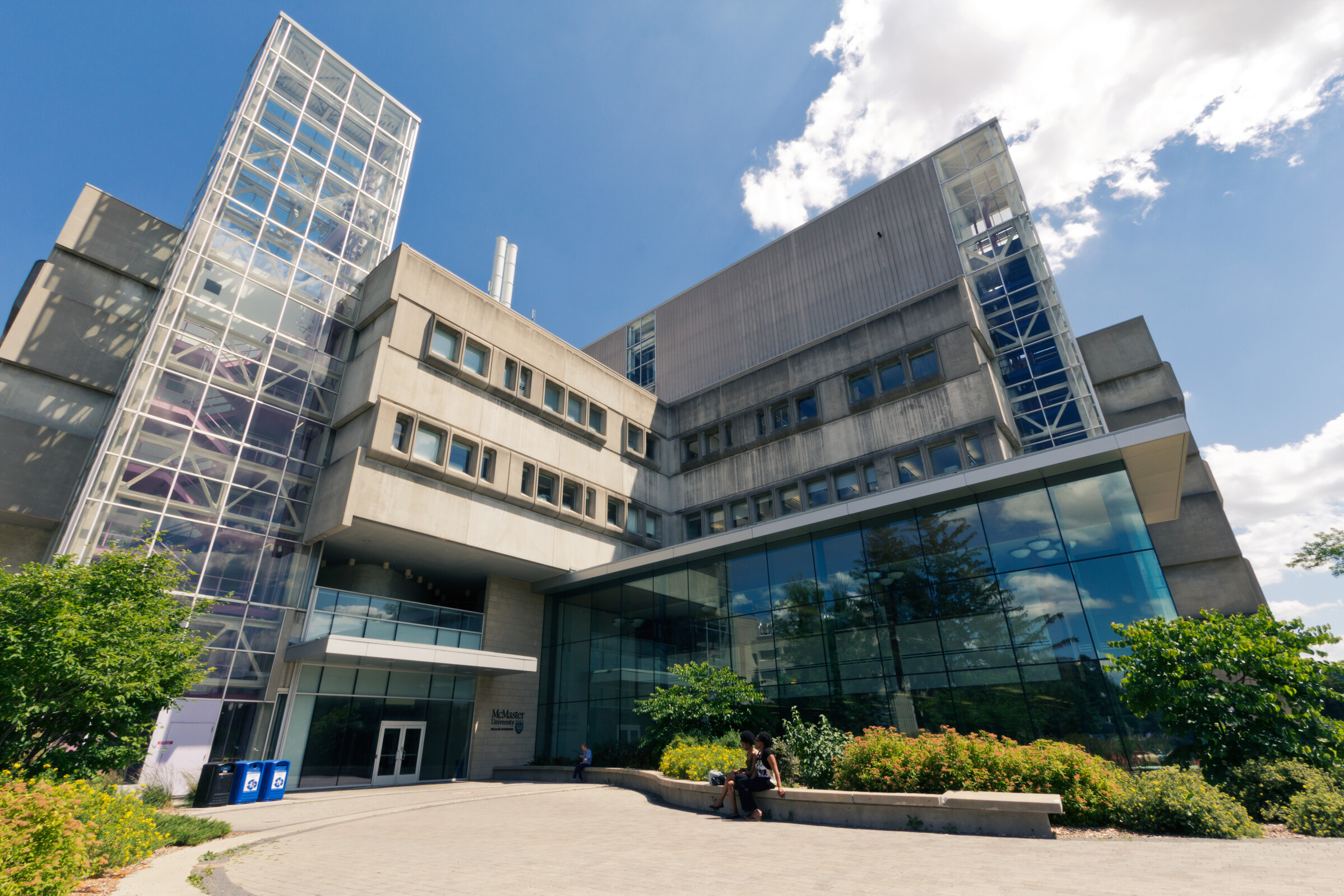

McMaster University
  

GRADUATE STUDY AT McMASTER UNIVERSITY

Historically, McMaster University was an outgrowth of educational work initiated by Baptists in central Canada as early as the 1830s and was named after Senator William McMaster (1811-1887).  In 1930, McMaster University moved from Toronto to its present site in Hamilton and in 1957, the University became a non-denominational institution.

Academic work is now under the direction of the University Senate, which is made up of representatives of the teaching and administrative staff, Governors, student body, and Alumni. There are six Faculties - Business, Engineering, Health Sciences, Humanities, Science, and Social Sciences - each offering a wide variety of undergraduate and graduate degree programs. In 2008-2009, over 19,500 full-time and 2800 part-time undergraduate students attended McMaster University. Approximately 2809 full-time graduate students and 603 part-time graduate students were registered in the School of Graduate Studies.

The University's activities are concentrated on an attractive campus located beside the Royal Botanical Gardens and yet within easy reach of downtown Hamilton.  The central campus is reserved for pedestrian traffic only.  In addition to the renowned  Health Sciences Centre, there are over forty buildings providing classrooms, laboratories, computer facilities, seminar rooms, libraries, residences, cafeterias, recreational facilities, and administrative and faculty office space.

Graduate study at McMaster University began about a century ago with M.A., M.Sc., and Ph.D. degrees first being conferred in 1894, 1942 and 1951, respectively.  The administration of graduate work has taken various forms throughout this period.  The Graduate Studies Committee of the Faculty of Arts and Science administered graduate work until 1957 when it was replaced by the Faculty of Graduate Studies.  In 1969, McMaster University adopted its current administrative structure for graduate work in which a Graduate Council was established as a  deliberative, administrative and executive body reporting directly to the Senate.

When McMaster moved to its current graduate organization, the aims of graduate work were described as "the highest development of the powers of reasoning, judgment, and evaluation in intellectual concerns; specialized training in professional skills; initiation into research or scholarly work and development of a capacity for its successful and independent pursuit; the fruitful pursuit of research and scholarly work".  This description remains as valid today as it was then.

Research is central to graduate work, and McMaster's strong research orientation has a pronounced effect on the character of its graduate programs.  The numerous research achievements of McMaster faculty members have been recognized by grants, prizes, medals, and fellowships in academic societies.  The 1994 Nobel Prize for Physics was awarded to Dr. B.N. Brockhouse of the Department of Physics and Astronomy.  Such distinctions attest to the qualifications and dedication of faculty members in developing and disseminating knowledge.  The education that McMaster faculty provide is valuable not only for the graduate student's career but also for the student's development as a person.

 
September 8, 2009 | HSGP Home | Terms of Use & Privacy Policy